 Feb 25, 2026
Marketing
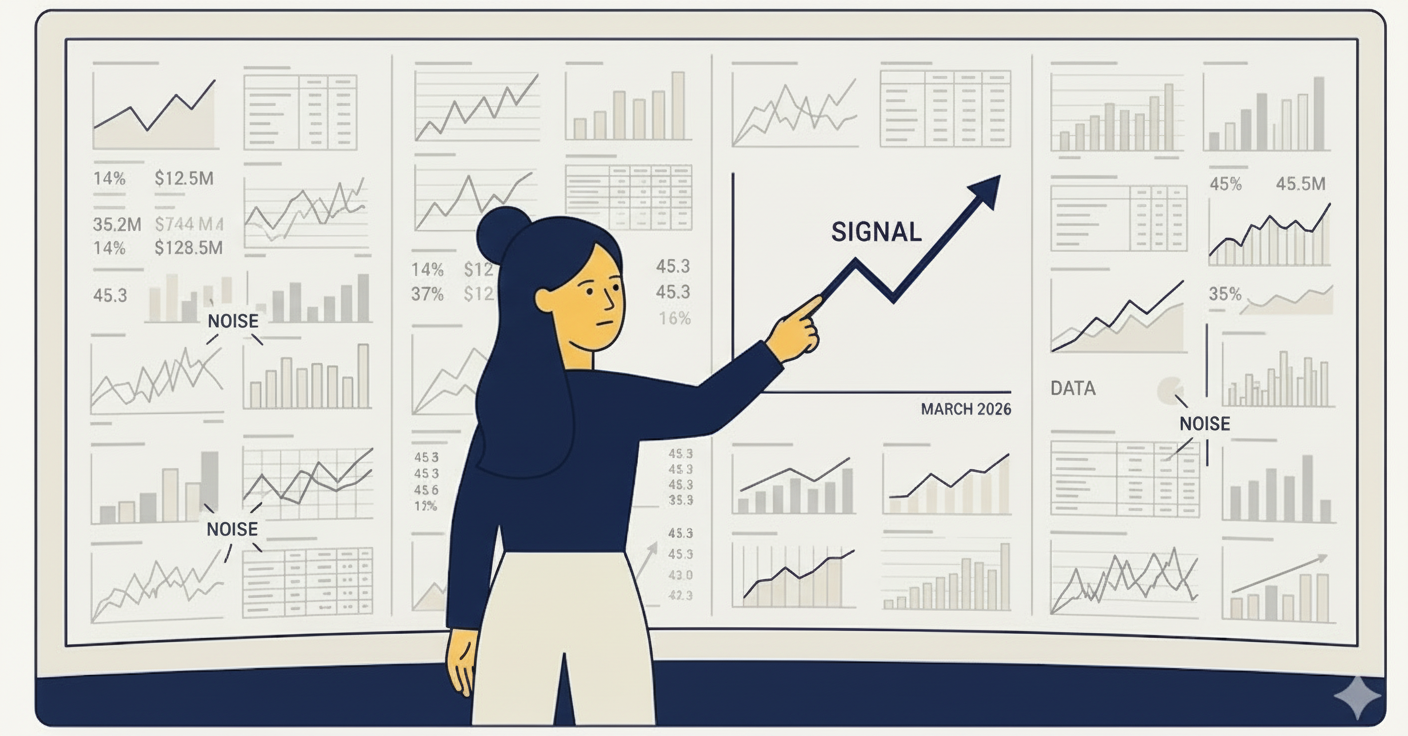
Social Media Analytics: The Only Metrics That Actually Matter
Cut through the noise and focus on the analytics that drive real business results for your social media strategy.
Read More

A content calendar is one of the most valuable tools in any social media manager's toolkit. It transforms chaotic, last-minute posting into a strategic, organized process that saves time and delivers better results. Whether you're a solo creator or managing a team, the right calendar format can make the difference between consistent publishing and scrambling for ideas at the last minute.
In this guide, we cover 10 content calendar formats — from simple weekly planners to comprehensive all-in-one suites — so you can find the approach that fits your workflow.
A content calendar is more than just a scheduling tool — it's the backbone of a successful content strategy. Here's why every creator and brand needs one:
Without a calendar, it's easy to fall into reactive posting — only sharing content when inspiration strikes. A calendar shifts you into proactive mode, where every post serves a purpose.
Best for: Beginners and solo creators
A basic seven-day grid with one row per platform. Each cell contains the post topic, format, and status. This is the simplest way to start — no special tools required, just a spreadsheet or even pen and paper.
Columns: Day, Platform, Topic, Format, Status
Best for: Seeing the big picture
A month-at-a-glance view that shows themes, key dates, and content distribution. Useful for identifying gaps — if you see three days with no content planned, you know where to fill in.
Columns: Date, Theme, Platform(s), Content Type, Notes
Best for: Brands with different strategies per platform
Separate tabs or views for each social network, allowing you to tailor content to each platform's unique audience and format. What works on LinkedIn differs from Threads, so having platform-specific plans ensures you're optimizing for each.
Columns: Date, Content, Hashtags, Media, Link, Performance
Best for: Marketing teams running multi-channel campaigns
Organizes content around specific campaigns with start/end dates, goals, and KPIs. Track which posts support which campaign, and measure results against objectives.
Columns: Campaign, Date Range, Platform, Content, Goal, KPI, Status
Best for: Blogs and long-form content
Designed for articles, newsletters, and in-depth content with stages from ideation to publication. Includes fields for SEO keywords, target audience, and distribution channels.
Columns: Topic, Keyword, Author, Draft Date, Publish Date, Distribution, Status
Best for: YouTube creators and video-first teams
Tracks the entire video pipeline — from concept to script to filming to editing to publishing. Includes fields for thumbnails, descriptions, and cross-promotion.
Columns: Title, Script Status, Filming Date, Edit Status, Publish Date, Platform, Thumbnail
Best for: Community-focused brands
Goes beyond publishing to track replies, comments, and community interactions. Helps you stay on top of conversations and measure relationship-building alongside content output.
Columns: Date, Post, Platform, Comments, Replies Sent, Engagement Rate
Best for: Data-driven teams
Combines your publishing calendar with performance metrics. See at a glance which posts performed well and which fell flat, so you can iterate on what works.
Columns: Date, Post, Platform, Impressions, Engagement, Clicks, Conversions
Best for: Teams with multiple contributors
Includes assignments, approval workflows, and review stages. Each post has an owner, reviewer, and status — ensuring nothing gets published without proper review.
Columns: Date, Assignee, Content, Reviewer, Status (Draft/Review/Approved/Published)
Best for: Comprehensive content operations
Combines elements of all the above into a single system with multiple views (weekly, monthly, by platform, by campaign). This is the most complex option but provides complete visibility.
Views: Weekly grid, Monthly overview, Platform filter, Campaign filter, Analytics overlay
Start by answering these questions:
The golden rule: start simpler than you think you need. You can always add complexity later. An over-complicated calendar that nobody uses is worse than a simple one that everyone follows.
The best content calendar is one you'll actually use. Pick the format that fits your current workflow, set it up in the next 30 minutes, and plan your first week of content.
As your strategy grows, your calendar can grow with it. Start simple, stay consistent, and let the structure free up your creative energy for what matters — creating great content.
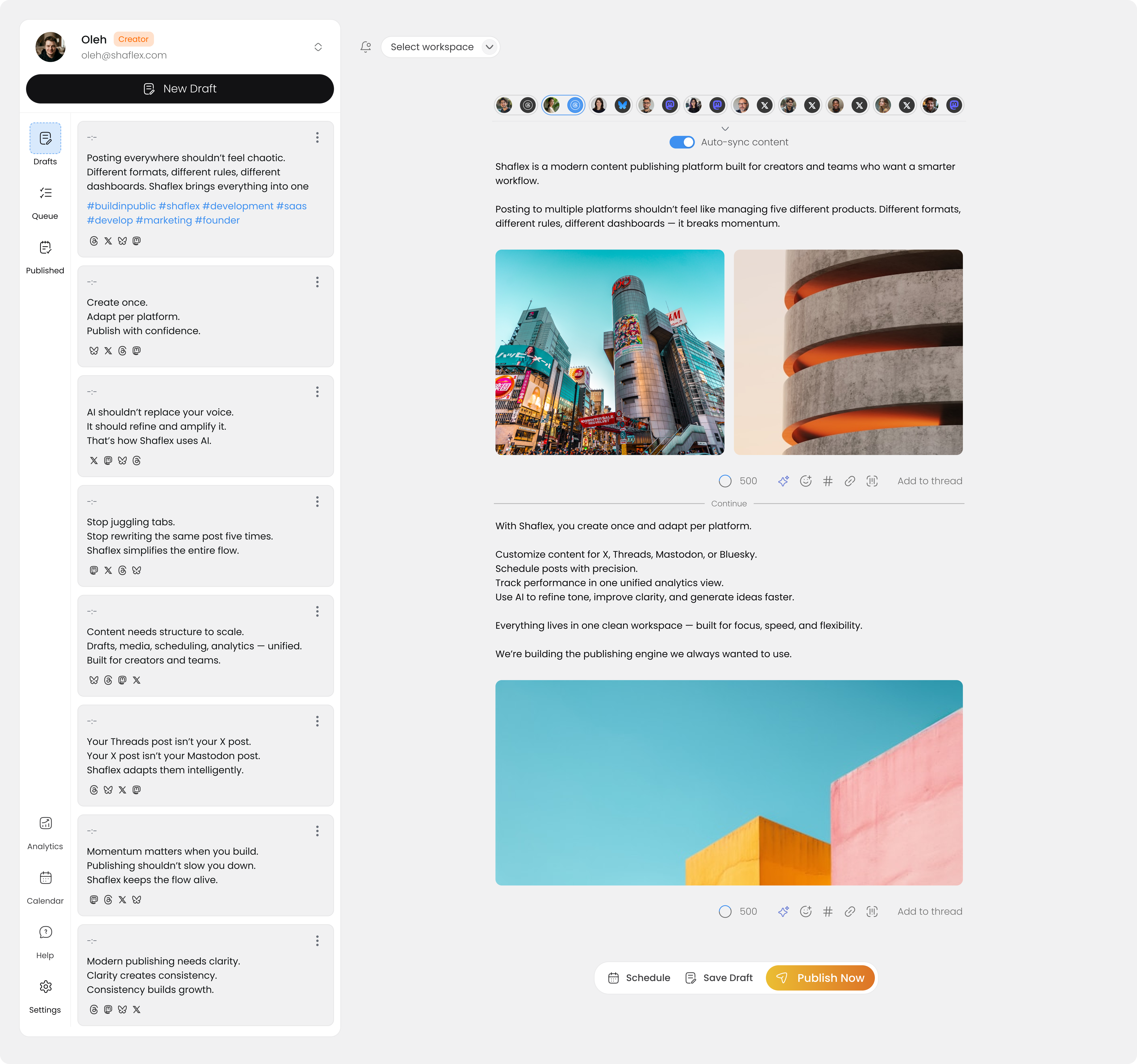
Want to skip the spreadsheets? Shaflex lets you plan, create, and publish across all your social platforms from one clean interface — no complex setup required.
Feb 25, 2026Cut through the noise and focus on the analytics that drive real business results for your social media strategy.
 Feb 18, 2026
Practical tips for leveraging AI tools to speed up content creation while maintaining your unique brand voice.
 Feb 10, 2026
Expert strategies to grow your LinkedIn following and generate quality leads for your B2B business.